 Kord
KordBlog
Reading a P&ID revision beyond the obvious change
A closer look at two pump-station drawing revisions: a new nitrogen supply, a changed discharge size, and the questions those edits raise for review.
In these two revisions of a piping and instrumentation diagram (P&ID), the new nitrogen supply is easy to see. It adds a line above the vessel and changes the shape of the drawing. The revisions also contain a smaller edit: the size marked on the pump discharge changes, along with a valve tag.
That makes this a useful example of how to read a revision. Finding the most visible addition is a starting point. The next step is to follow the existing connections and check what changed along them.
The public sample below shows revisions 2 and 3 of the same pump-station drawing. Switch between them to compare the discharge between P-002 and V-003, or show the differences to see the changed pixels.
Comparing revisions 2 and 3
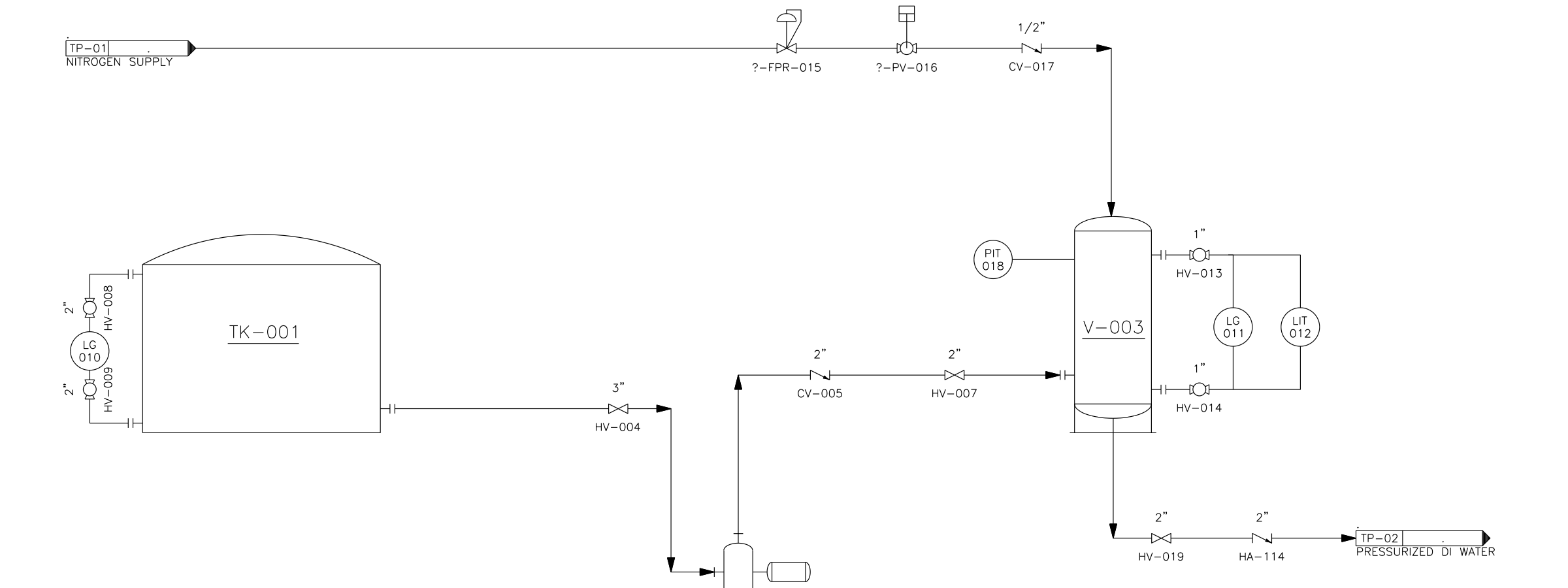
Drawing detail · open the comparison below for the full sheet.
Public sample · pump-station P&ID
The smaller edits on the discharge line
Between P-002 and V-003, the line-size annotation changes from 3 inches to 2 inches. The tag HV-005 becomes CV-005. Both edits sit on an existing connection, so the overall layout remains familiar even though the information on it has changed.
The overlay marks removed pixels in red and added pixels in green. It helps locate the edits, but the colors do not explain why they were made. A changed tag alone does not establish which physical component is intended, and the drawing alone does not establish whether the new line size is suitable.
What to check beyond the drawing
A reviewer can use those edits to frame the next questions. Does the line list carry the revised size? Does the valve schedule reflect the new tag and intended component? Did any calculation use the previous size, and does it need to be revisited? Those questions require the related documents and the design context.
This example contains the two drawing revisions only. It does not include a matching line list, valve schedule or calculation, so it cannot demonstrate an inconsistency between them. Those are follow-up checks, not findings from this comparison.
Making the review reproducible
When recording a finding, include the two revision identifiers, the location of the edit and what the drawing actually shows. Keep the observation separate from the question it raises: “the discharge annotation changed from 3 inches to 2 inches” is reproducible; deciding whether that change is acceptable needs more evidence.
The embedded view uses rendered images from Kord’s public PDF sample. The full-comparison link above opens those same files, where you can inspect the surrounding drawing. The useful result of this exercise is a specific change and a clear next question for review.